A well-designed jewelry display cabinet can transform your retail space. It draws customers in, showcases your finest pieces, and protects your valuable inventory. But creating the perfect display requires careful planning and attention to detail.
This comprehensive guide walks you through the entire jewelry display cabinet design process. Whether you're opening a new store or renovating an existing space, you'll learn what materials to choose, which features matter most, and how to avoid common mistakes.

Understanding Your Retail Space Requirements
Before sketching any designs, you need to understand your space. The best jewelry display cabinet for one store might be completely wrong for another.
Assessing Store Layout and Traffic Flow
Start by mapping how customers move through your store. Watch where they naturally pause. Notice which areas get the most attention. Your display cabinets should work with these patterns, not against them.
Consider these factors:
- Entry sightlines — What do customers see first when they enter?
- Browse zones — Where do people slow down to look more closely?
- Consultation areas — Where will staff show pieces to serious buyers?
- High-traffic corridors — Which paths see the most foot traffic?
The goal is positioning display cabinets where they capture attention without blocking movement.
Determining Display Cabinet Placement
Once you understand traffic flow, plan your cabinet placement strategically. Primary display cabinets should face the entrance. Secondary cabinets can line the walls. Island-style cases work well in larger spaces with room to walk around them.
Think about power access too. LED lighting needs electrical connections. Plan your layout so cables can reach outlets without crossing walking paths.
Essential Materials for Jewelry Display Cabinets
Your choice of materials affects everything from appearance to durability to cost. Quality materials create a premium impression. Poor choices can undermine even the most expensive jewelry.
Glass Options for Maximum Visibility
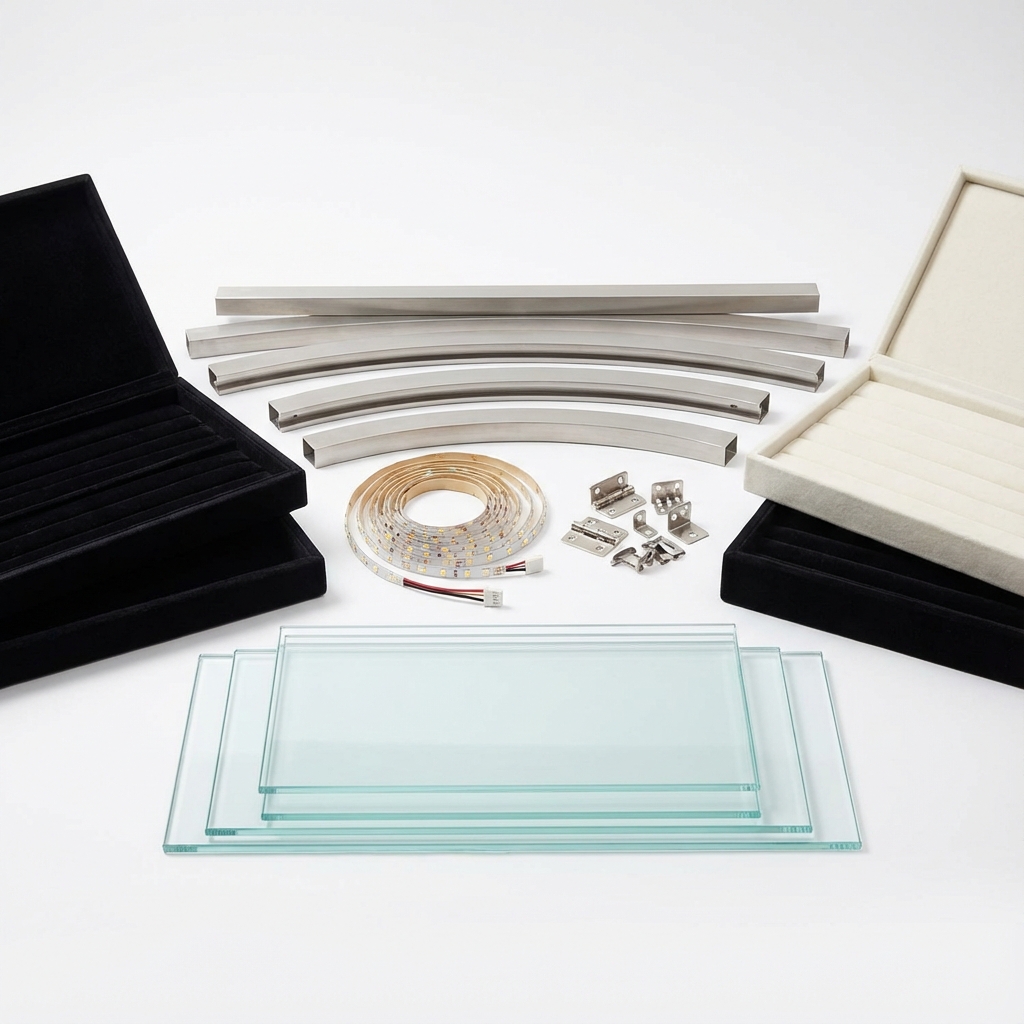
Glass is the most important material in any jewelry display cabinet. The right glass showcases your pieces beautifully. The wrong glass creates distracting reflections or a cheap appearance.
Tempered glass is essential for safety. Standard glass shatters into dangerous shards. Tempered glass breaks into small, relatively harmless pieces. Most building codes require it for display cases.
Low-iron glass (also called ultra-clear or Starphire glass) eliminates the greenish tint of standard glass. This matters for jewelry display because colors appear more accurate. Diamond sparkle shows better through low-iron glass.
Anti-reflective coatings reduce glare from store lighting. They make the glass nearly invisible, putting all focus on your jewelry. This coating adds cost but dramatically improves the viewing experience.
For most jewelry stores, we recommend 6mm tempered low-iron glass as the baseline. Add anti-reflective coating for feature displays or stores with challenging lighting.
Frame Materials That Last
The frame holds everything together and defines your cabinet's style. Choose based on your store's aesthetic and budget.
Stainless steel offers modern elegance and excellent durability. It resists corrosion and fingerprints. Brushed, polished, or colored finishes (gold, rose gold, black) provide design flexibility. Our luxury gold jewelry display cabinet uses a brushed gold stainless steel frame for timeless appeal.
Hardwood creates a classic, warm atmosphere. Oak, walnut, and mahogany are popular choices. Wood works well for traditional jewelry stores or those selling vintage and estate pieces.
MDF with veneer provides the look of solid wood at lower cost. Quality veneer is indistinguishable from solid wood to most customers. It's an excellent choice for secondary displays or when budget is tight.
Aluminum is lightweight and affordable. It works for temporary displays or retail environments where you might reconfigure frequently.
Interior Finishes and Display Trays
The interior of your cabinet matters just as much as the exterior. Velvet and suede remain the most popular choices for jewelry display trays. They prevent scratches, provide subtle texture, and photograph well.
Color matters significantly. Black velvet creates dramatic contrast with diamonds and white gold. Ivory or champagne tones complement yellow gold and rose gold pieces. Some stores use different colors for different jewelry types.
Custom-fitted display trays keep pieces organized and prevent movement during display. Consider removable trays for flexibility in arrangements.
Key Design Features That Sell Jewelry
Beyond materials, certain features directly impact how well your cabinets sell jewelry. These are the elements that create that premium shopping experience.
LED Lighting Systems
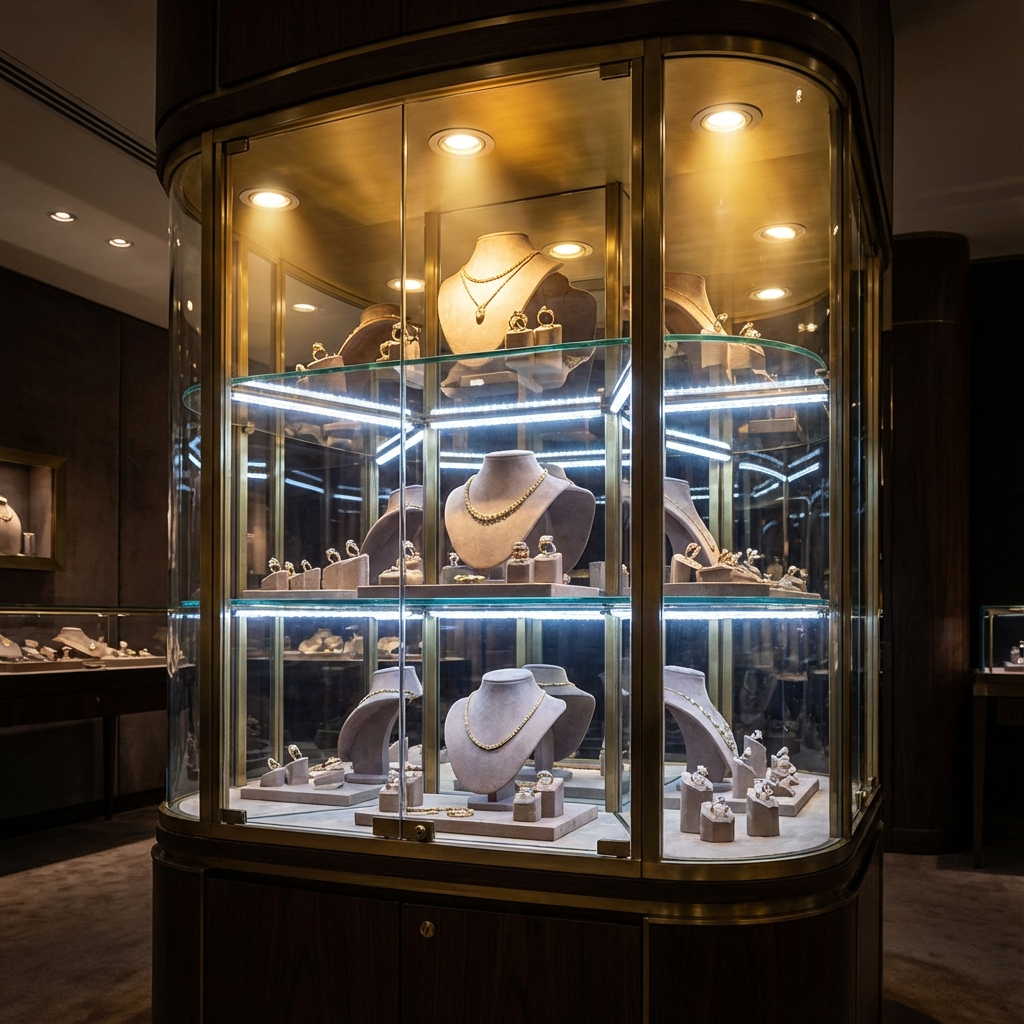
Lighting makes or breaks jewelry display. The right lighting makes diamonds sparkle, gold glow, and gemstones pop with color. Poor lighting makes everything look dull and disappointing.
Modern jewelry display cabinets use LED lighting almost exclusively. LEDs produce minimal heat, which protects delicate pieces and keeps customers comfortable when leaning close to view items. They also last far longer than traditional bulbs and use less electricity.
Consider these lighting approaches:
- Top-down spotlights highlight individual pieces and create dramatic shadows
- Strip lighting provides even illumination across entire shelves
- Front lighting reduces shadows and shows pieces as customers would see them worn
- Color temperature around 4000K-5000K (neutral to cool white) shows diamonds and precious metals most accurately
Many of our cabinets, like the modern jewelry store display cabinet, include integrated LED systems with adjustable brightness.
Security Considerations
Jewelry represents significant value in a small space. Your display cabinets must protect that investment while still allowing customers to browse comfortably.
Locks are the first line of defense. Hidden magnetic locks look cleaner than visible keyholes. Electronic locks with audit trails show who accessed which cabinet and when. Some stores use delayed-opening mechanisms that deter smash-and-grab attempts.
Glass thickness affects security. Thicker glass (8mm or more) resists breaking better than thin panels. Laminated glass holds together even when struck, preventing quick grabs.
Cabinet construction matters too. Solid backs and bottoms prevent access from below. Welded or heavily reinforced joints resist prying. Consider whether your cabinets need to resist amateur thieves or determined professionals.
Balance security with accessibility. Staff need quick access to show pieces to customers. Overly complicated security slows sales and frustrates everyone.
Visibility and Accessibility
Great jewelry display cabinets put products at the optimal viewing angle. Standard counter height works for most browsing. But consider adjustable shelving so you can experiment with different arrangements.
The retail jewelry display cabinet counter offers an excellent balance of visibility and accessibility. The sloped top panel makes viewing comfortable while the counter height keeps pieces at eye level.
For high-value pieces, consider cabinets that rotate or have multiple viewing angles. Customers appreciate being able to see all sides of a ring or pendant without asking staff.
Common Problems and How to Avoid Them
We've seen thousands of jewelry display installations. These are the mistakes that cause the most regret.
Poor Lighting Choices
The most common error is insufficient lighting. Store owners often rely on existing overhead lights and add only minimal cabinet lighting. The result is flat, unimpressive displays.
Another mistake is using the wrong color temperature. Warm, yellowish light (2700K-3000K) makes diamonds look dull and gold look brassy. Cool, bluish light (6000K+) makes everything look harsh and clinical.
Solution: Install more lighting than you think you need. Use neutral 4000K-5000K color temperature. Add multiple light sources at different angles to eliminate shadows. Budget for quality LED systems; cheap lights fail quickly and look worse.
Inadequate Security
Some stores prioritize aesthetics over security. They choose frameless designs or large glass panels that look stunning but are easy to break. Others install locks that staff can't operate quickly, slowing service.
Solution: Discuss your security needs honestly with your display manufacturer. Explain your insurance requirements and local crime patterns. A good manufacturer can recommend appropriate security features that don't compromise appearance.
Ignoring Ergonomics
Displays that are too high, too low, or too deep frustrate both customers and staff. We see stores with top shelves nobody can reach and bottom shelves customers have to squat to view.
Solution: Consider who will use the cabinets. Counter-height displays (36-38 inches) work for most customers. Ensure all shelves are within comfortable reach. Keep the cabinet depth manageable so pieces at the back remain visible.
Staff ergonomics matter too. If employees spend all day reaching awkwardly into cabinets, they'll develop strain injuries. Design for comfortable access from behind the counter.
Working with a Custom Manufacturer
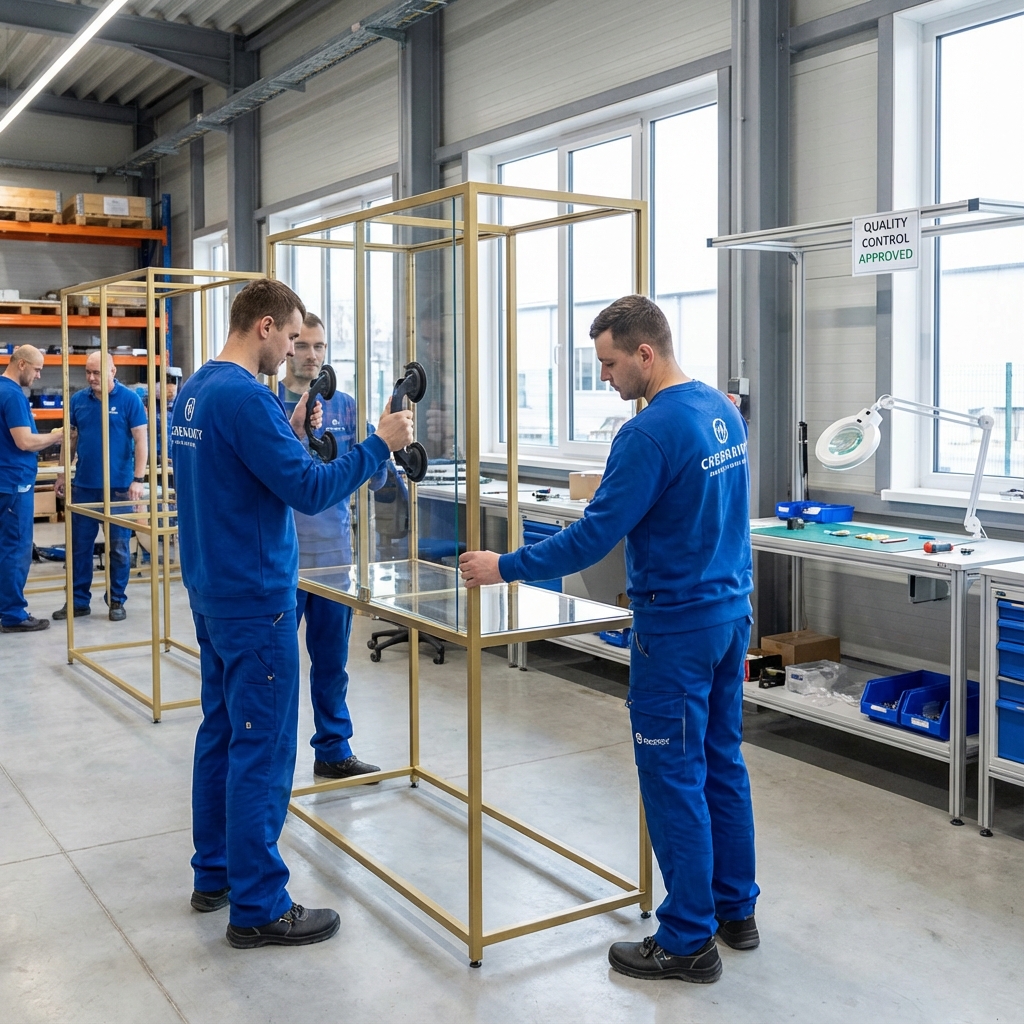
Off-the-shelf display cabinets rarely fit perfectly. Custom manufacturing ensures every detail matches your vision and space requirements.
Benefits of Customization
Custom cabinets fit your exact space dimensions. No awkward gaps, no wasted space, no compromises. They also match your brand identity precisely, from colors to finishes to special features.
The rose gold jewelry display counter shows what's possible with custom finishing. The distinctive rose gold color matches specific brand requirements that standard products couldn't achieve.
Custom also means you get exactly the features you need. Want deeper drawers? Specific lock types? Unusual dimensions? Custom manufacturing accommodates all of these.
The Design-to-Production Process
Working with a manufacturer like us typically follows these stages:
- Consultation — We discuss your needs, space, and budget. You share inspiration images and specific requirements.
- Design — Our team creates detailed drawings and 3D renders. You review and request changes until the design is perfect.
- Material Selection — We finalize materials, finishes, and hardware. You approve samples before production begins.
- Manufacturing — Skilled craftsmen build your cabinets to specification. Quality control checks every piece.
- Shipping and Installation — We ship worldwide with secure packaging. Installation instructions or on-site support are available.
This process typically takes 4-8 weeks depending on complexity and quantity.
What to Expect from Your Manufacturer
A quality manufacturer offers more than just building cabinets. Look for these indicators:
- Experience with jewelry display specifically, not just general fixtures
- Portfolio of completed projects you can review
- Samples of materials and finishes you can see in person
- References from other jewelry retailers
- Warranty that covers materials and workmanship
- Support for questions during and after installation
At Displon, our team brings over 15 years of specialized experience in jewelry display manufacturing. We understand the unique requirements of precious jewelry presentation. Learn more about our capabilities or contact us to discuss your project.
Conclusion
Designing a jewelry display cabinet involves balancing aesthetics, functionality, security, and budget. Start by understanding your space and how customers move through it. Choose quality materials that match your brand. Invest in proper lighting. Don't overlook security and ergonomics.
Most importantly, work with an experienced manufacturer who understands jewelry retail. The right partner guides you through decisions and delivers cabinets that showcase your jewelry beautifully for years to come.
Ready to design your perfect jewelry display? Contact our team for a free consultation. We'll help you create display cabinets that elevate your store and sell more jewelry.