Your store's physical appearance shapes customer behavior before any salesperson says a word. Effective retail store display ideas can increase sales by 20-30% without changing your product lineup or pricing. The secret lies in visual merchandising — the art and science of presenting products in ways that attract attention and encourage purchases.
This guide shares proven display strategies used by successful retailers worldwide. Whether you operate a boutique jewelry shop, electronics store, or mall kiosk, these principles will help you create displays that convert browsers into buyers.
Why Visual Merchandising Matters for Retail Success
Visual merchandising goes beyond making your store look attractive. It influences customer navigation, product discovery, and buying decisions at every step.
The Psychology Behind Display Design
Shoppers make purchasing decisions in seconds. Research shows that 70% of purchase decisions happen at the point of sale. Your display fixtures create the first impression that determines whether customers engage or walk past.
Effective displays trigger emotional responses:
- Aspiration — "I want my life to include this product"
- Curiosity — "I need to look at this more closely"
- Urgency — "I should buy this now before it's gone"
- Trust — "This store clearly cares about quality"
Understanding these psychological triggers helps you design displays that resonate with your target customers.
Impact on Sales Metrics
Well-designed store fixtures and displays deliver measurable results:
- Increased dwell time — Customers linger longer, discovering more products
- Higher average transaction value — Better product visibility encourages add-on purchases
- Improved conversion rates — Engaging displays turn browsers into buyers
- Reduced returns — Clear presentation sets accurate expectations
Many retailers underestimate how much their display choices affect these metrics. Small improvements compound across thousands of customer interactions.
Essential Retail Display Types and When to Use Them
Different display types serve different purposes. Understanding your options helps you choose the right solution for each product category and store zone.
Glass Display Cases
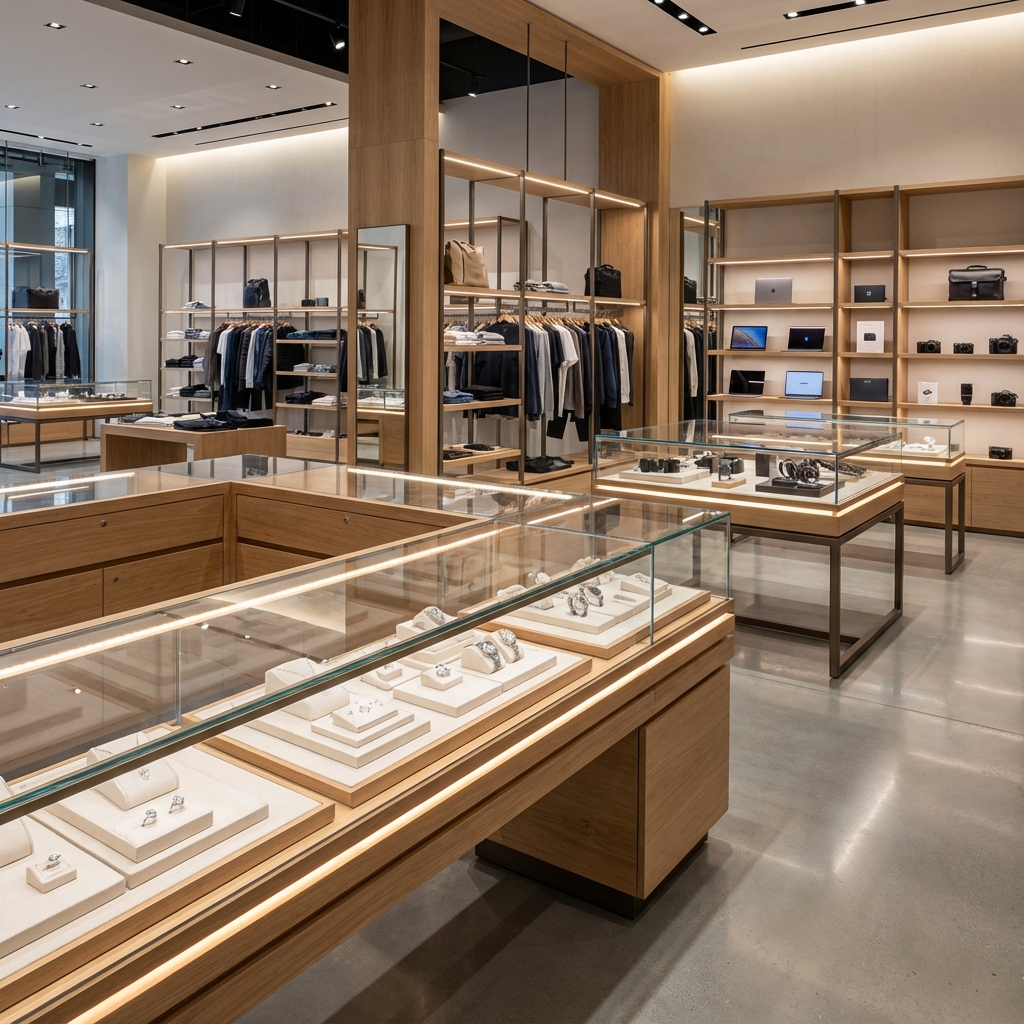
Glass display cases are ideal for high-value items that need both visibility and security. They create a sense of exclusivity while protecting merchandise from handling damage or theft.
Best applications:
- Jewelry display cabinets for rings, necklaces, and watches
- Electronics displays for phones, tablets, and accessories
- Collectibles and luxury goods
Modern glass cases feature integrated LED lighting that enhances product presentation. Low-iron glass eliminates the greenish tint that can distort colors, making diamonds sparkle and metals gleam.
Open Shelving and Gondolas
Open shelving encourages customer interaction. Products become tangible and real rather than distant objects behind glass. This works well for items that benefit from touch, like fabrics, cosmetics testers, or packaged goods.
Consider open displays for:
- Cosmetics and beauty products where customers test before buying
- Fashion accessories customers want to try on
- Medium-value items that don't require high security
The retail display shelf with drawer offers versatility for stores needing both display and storage.
Mall Kiosks and Island Displays
Mall kiosks create impact in high-traffic locations. They're designed for 360-degree visibility, maximizing exposure to passing shoppers.
Island displays work when you need to:
- Launch new products in high-traffic zones
- Create seasonal or promotional displays
- Establish brand presence in shared retail spaces
Successful kiosks balance attention-grabbing design with efficient use of limited footprint.
Layout Strategies That Guide Customer Flow
How you arrange displays affects how customers move through your space. Strategic layout creates a journey that exposes shoppers to your full product range.
The Decompression Zone
The first few feet inside your entrance is the decompression zone. Customers here are adjusting from the outside environment. They rarely notice displays in this area.
Use this space for:
- Brand signage that sets expectations
- Transition flooring or lighting that signals entry
- Simple, non-sales elements
Place your key displays just beyond this zone where customers are ready to engage.
Power Walls and Focal Points
The wall to the right of the entrance (in most markets) receives the most attention. This "power wall" is prime real estate for new arrivals, bestsellers, or high-margin items.
Create additional focal points throughout your space:
- End caps at aisle intersections
- Feature tables in main walkways
- Elevated platforms for hero products
These focal points break up the shopping journey and create discovery moments.
The Path to Purchase
Guide customers from high-interest items toward complementary products. A jewelry store might lead from engagement rings toward wedding bands, then to gifts and accessories.
This path should feel natural, not forced. Wide aisles invite exploration. Strategic sightlines let customers see what's ahead, encouraging deeper store penetration.
Lighting Techniques That Enhance Products
No discussion of visual merchandising is complete without addressing lighting. The right lighting makes products irresistible; poor lighting makes everything look dull.
Layered Lighting Approach
Professional retail lighting uses three layers:
- Ambient lighting — General illumination that makes the space comfortable and navigable
- Accent lighting — Focused beams that highlight specific products or displays
- Task lighting — Bright, even light for areas where customers examine products closely
Each layer serves a distinct purpose. Together, they create depth and visual interest.
Color Temperature Matters
Light color dramatically affects how products appear:
- Warm light (2700K-3000K) creates a cozy, inviting atmosphere but can make whites look yellow
- Neutral light (3500K-4000K) balances warmth with accurate color rendering
- Cool light (5000K-6500K) feels clean and modern, ideal for showcasing metals and tech products
Match your lighting to your merchandise. Jewelry stores typically use cooler temperatures to make diamonds sparkle, while fashion boutiques often prefer warmer tones that flatter skin.
LED Advantages for Displays
LED lighting has become the standard for commercial display cases. Key benefits include:
- Low heat output that won't damage sensitive merchandise
- Long lifespan reducing maintenance costs
- Energy efficiency for lower operating expenses
- Flexibility in color temperature and beam control
Our modern jewelry store display cabinet incorporates integrated LED systems designed specifically for precious item presentation.
Signage and Graphics That Communicate
Visual merchandising extends beyond fixtures to the signage that communicates with customers.
Clear Price Communication
Price confusion kills sales. Customers who can't quickly find pricing often won't ask — they'll simply move on.
Effective price signage:
- Uses legible fonts sized for viewing distance
- Maintains consistent placement across similar products
- Includes enough information for quick decisions
- Avoids cluttering the product view
Brand Storytelling
Beyond prices, signage tells your brand story. What makes your products special? Why should customers choose you over competitors?
Keep messaging concise. Three words matter more than thirty when customers are scanning your displays. Use imagery that reinforces product benefits and connects emotionally.
Seasonal and Promotional Displays
Static displays become invisible over time. Regular refreshes maintain customer interest and showcase new inventory.
Planning Display Calendars
Successful retailers plan display changes around:
- Seasonal shifts (spring refresh, holiday themes)
- Product launches and new arrivals
- Promotional events and sales
- Local events or community tie-ins
Create a calendar at least one quarter ahead. This allows time for ordering materials, preparing graphics, and training staff on new arrangements.
Flexibility in Display Systems
Modular display systems simplify seasonal changes. Fixtures that reconfigure easily reduce labor costs and minimize store disruption.
Consider investing in:
- Adjustable shelving that accommodates different product sizes
- Interchangeable graphic panels
- Rolling fixtures for fast repositioning
Common Display Mistakes to Avoid
Even experienced retailers make these errors. Check your store against this list:
Overcrowding
More products don't mean more sales. Crowded displays confuse customers and diminish perceived value. Give each item breathing room. White space isn't wasted space — it focuses attention.
Inconsistent Heights
Eye-level placement drives sales. Products too high or too low get overlooked. Audit your displays from the customer's perspective. Ensure your most profitable items occupy prime vertical real estate.
Neglecting Maintenance
Dusty shelves, burnt-out bulbs, and faded signage communicate neglect. Customers unconsciously question whether a store that doesn't maintain its appearance will take care of their purchase.
Build daily display checks into your opening routine. Replace worn elements promptly.
Getting Started with Better Displays
Transforming your retail displays doesn't require a complete store renovation. Start with these steps:
- Audit current performance — Identify which displays generate sales and which underperform
- Study customer behavior — Watch how shoppers navigate your space and interact with products
- Prioritize high-impact changes — Focus first on entrance areas and bestseller zones
- Test and refine — Try new arrangements and measure results before committing
Professional display fixtures make a lasting difference. Quality cases and shelving systems communicate the premium nature of your products while providing the durability needed for daily retail use.
At Displon, we manufacture custom display solutions for retailers worldwide. From jewelry display cabinets to mall kiosks, our one-stop service covers design through production. Contact us to discuss how we can help elevate your retail environment.